Author:
Published Date:
Share:
If you’re dealing with scoliosis, Pilates can be part of the plan, and there’s even evidence in adolescents for improved coronal balance and Cobb angle changes (Frontiers in Pediatrics scoliosis study). Just don’t treat it like a generic posture Pilates workout, it’s not.
Additionally, Pilates enhances muscle tone and flexibility, particularly in areas like the legs, glutes, and shoulders, creating a balanced, lean physique. Regular practice strengthens the smaller stabilising muscles often overlooked in traditional workouts, which contributes to better balance, coordination, and joint support. This combination of core stability and full-body strength also improves endurance and mobility, allowing for greater physical resilience and ease of movement in daily life.
Most people walk into their first session thinking it’ll be gentle, maybe even a bit “stretchy”. Ten minutes later they’re shaking, trying to keep their ribs from flaring, wondering why their hips feel like they’ve developed opinions. The straight answer, up front:
Tower Pilates and Reformer Pilates are both equipment-based Pilates classes that use springs for resistance and support, but the Tower is built around a stable mat with vertically pulled springs, while the Reformer is a moving carriage on rails with horizontally loaded springs. That one design choice changes the whole feel, the movement mechanics, the exercise focus, and even the class vibe.
If you want this to be objective, it helps to treat any other system decision. What are you trying to get from your workouts, what access do you actually have, and what kind of coaching keeps your form honest when your brain starts bargaining.
What are Tower and Reformer sessions?
A “Tower” session and a “Reformer” session are usually the same Pilates principles, different apparatus, different constraints. Same obsession wih breath, alignment, control, and that slightly smug post-class posture where you sit taller without meaning to.
Tower apparatus
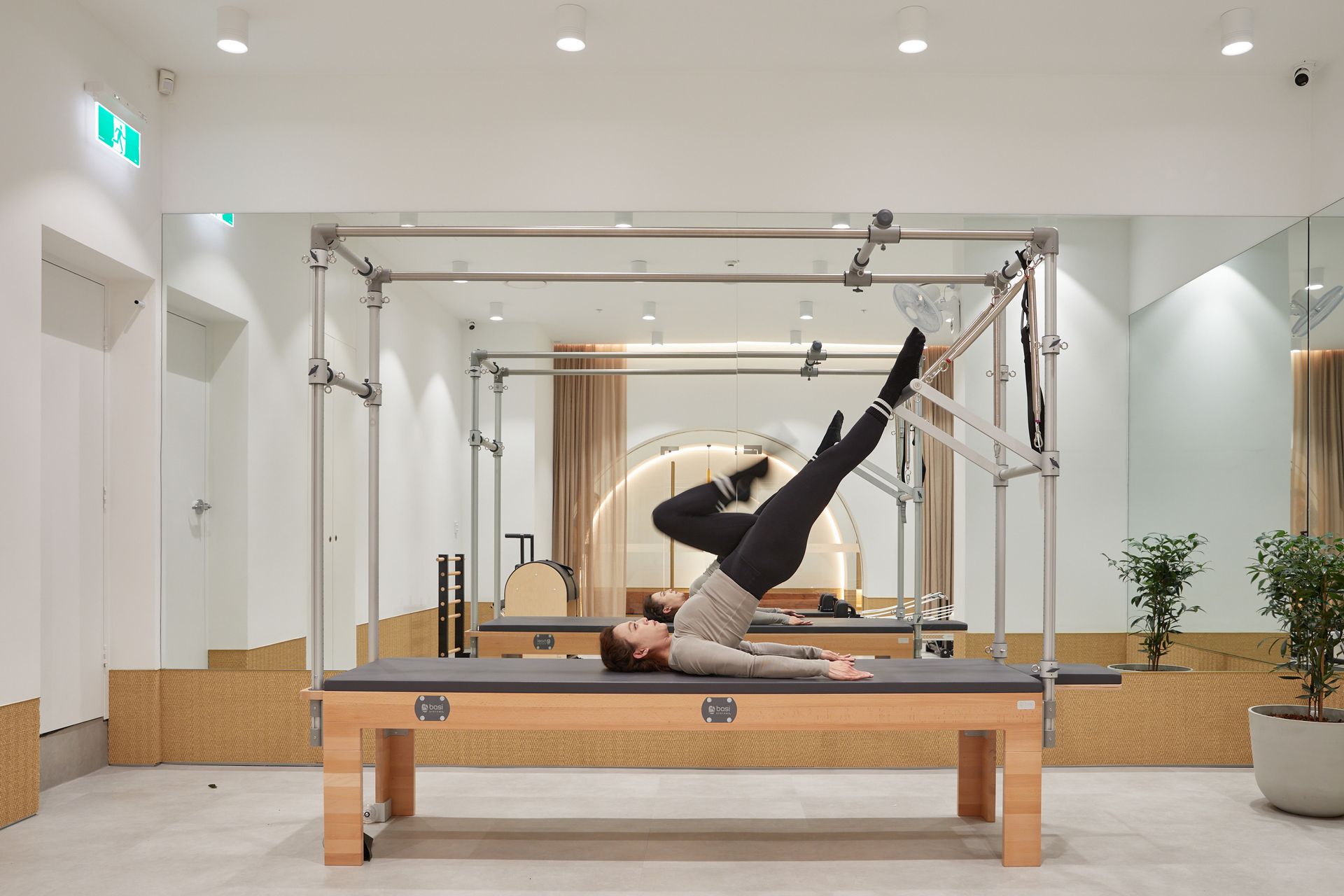
A Pilates tower (sometimes called a “wall unit” or tower on a mat) is basically a vertical frame bolted to a wall or a freestanding strutcture, with springs, bars, and straps attached. You’re working on a mat, not a moving platform. The resistance is coming at you from above, from the side, occasionally at an angle that makes you realise you have unilateral weaknesses you’ve been politely ignoring.
The Tower has a close family resemblance to the Cadilac (Trapeze Table). Same lineage, fewer bells and whistles, often less studio floor space, and typically a lower cost to install. It's still serious equipment. It is not a Pilates-themed clothes rack.
Reformer apparatus
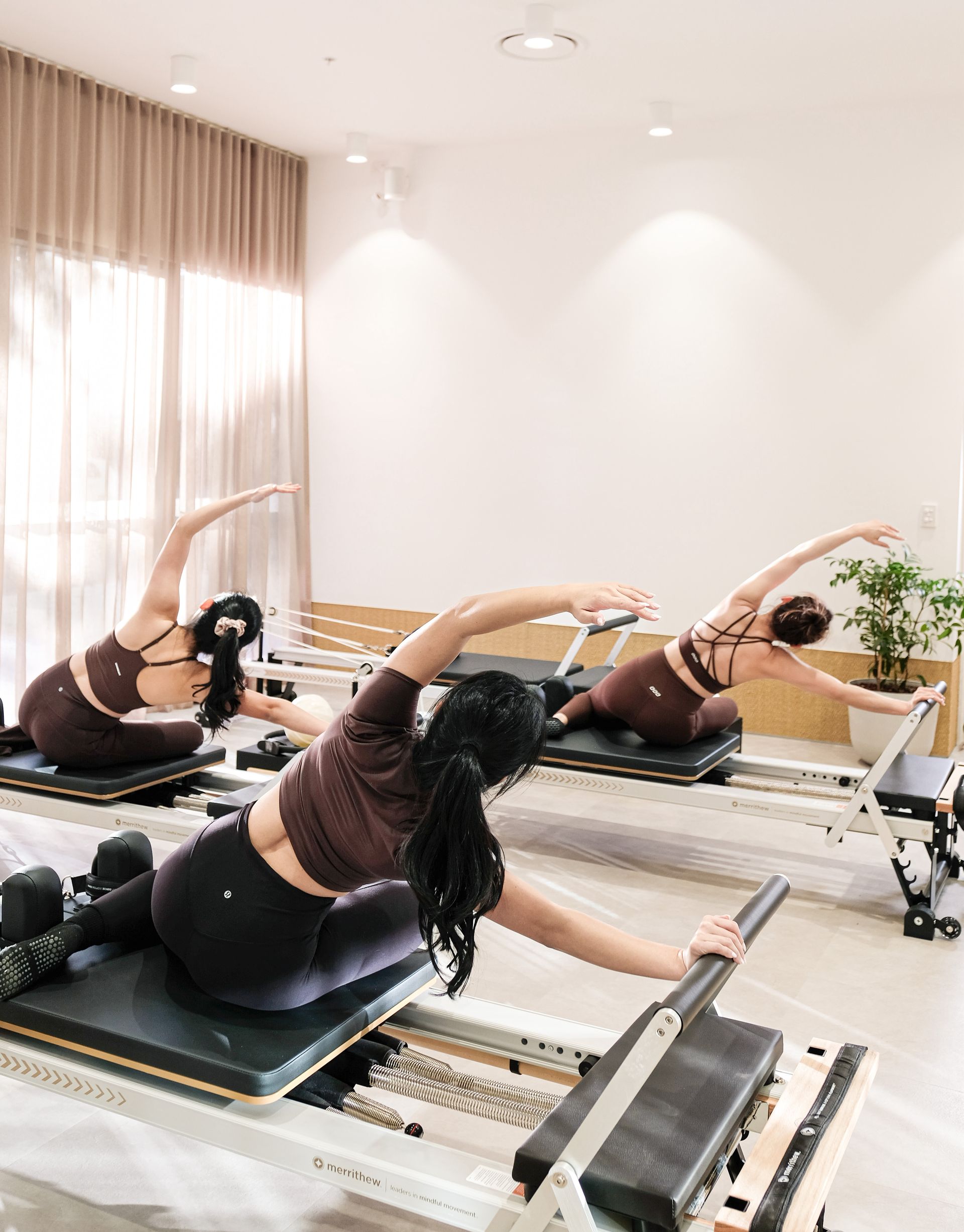
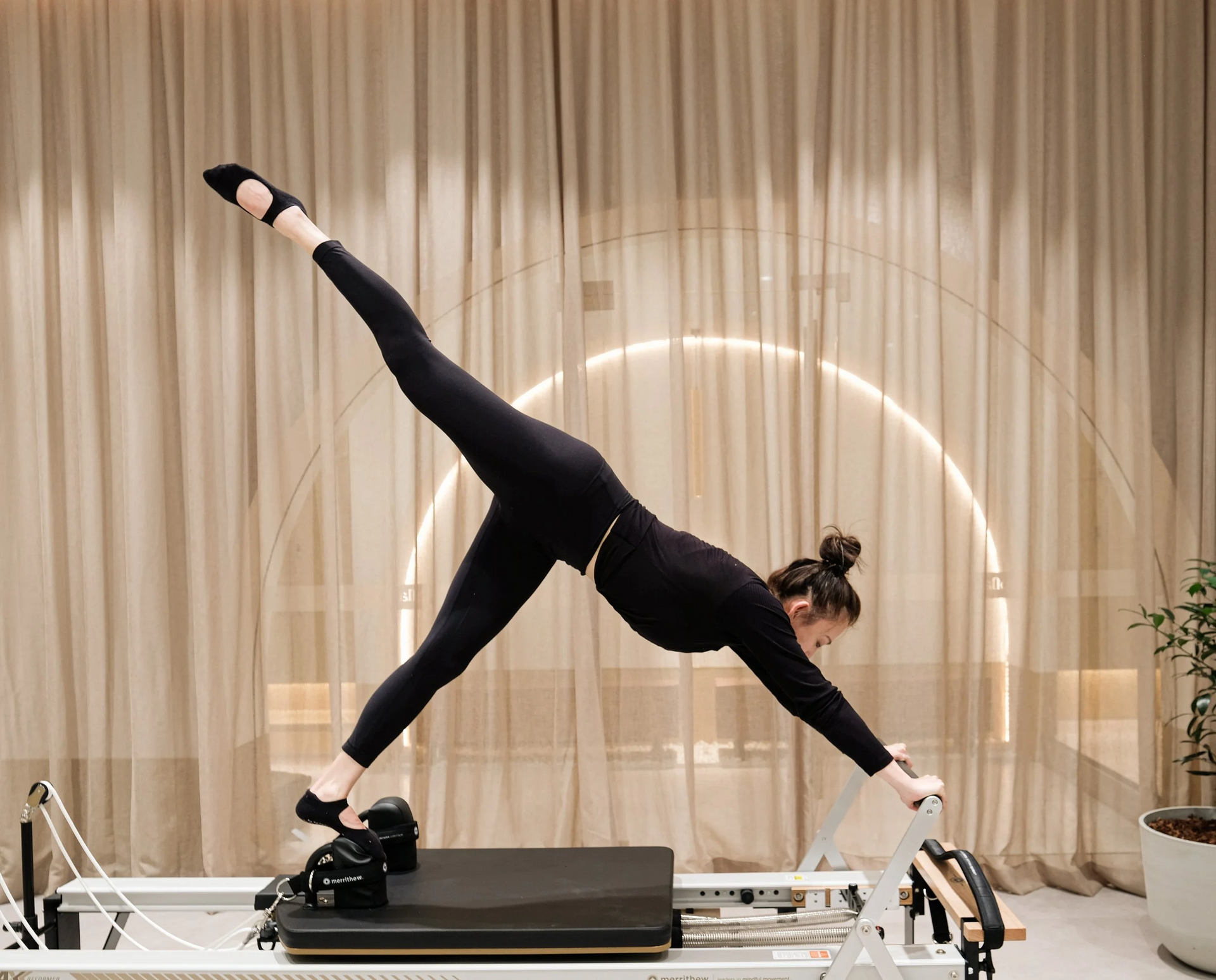
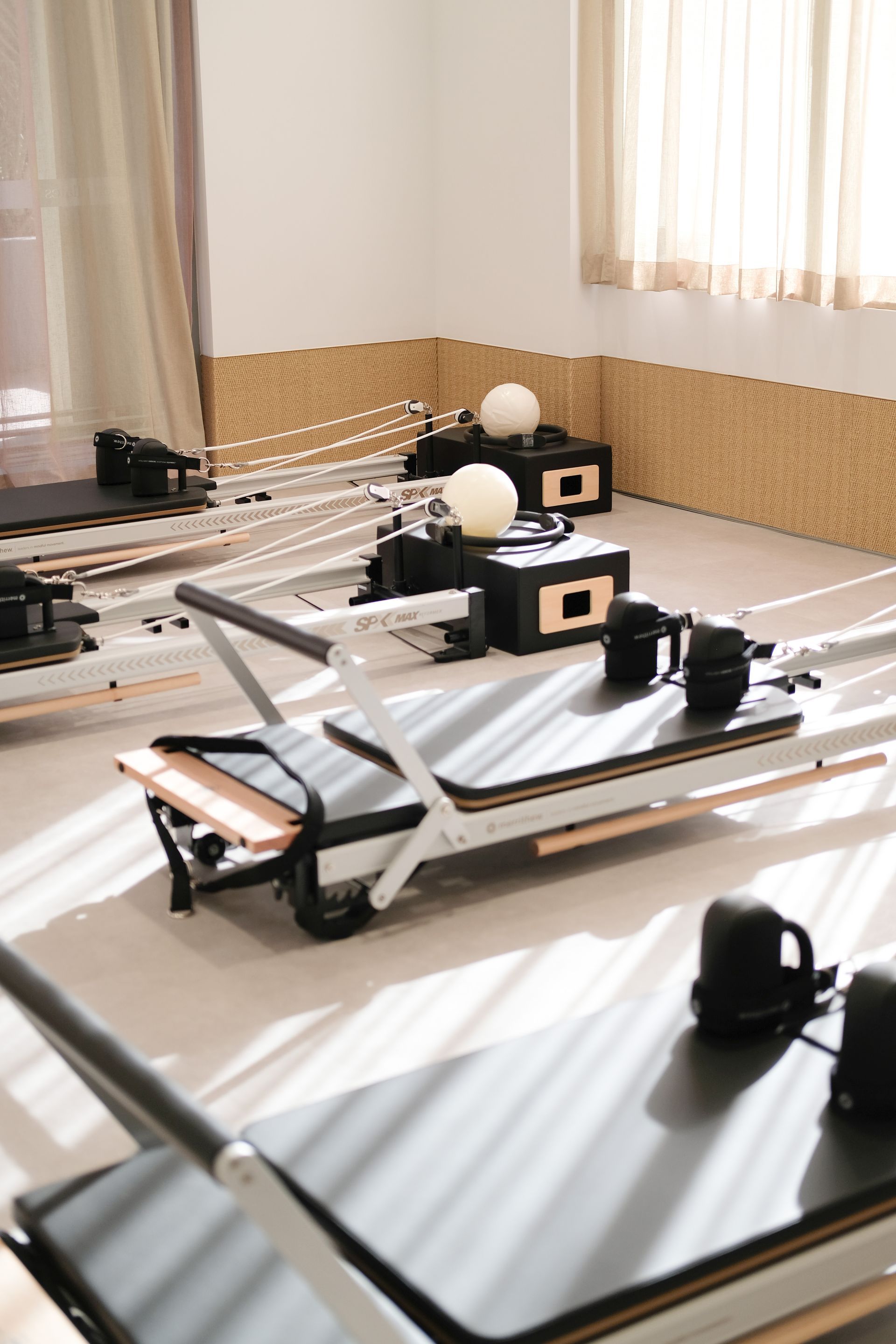
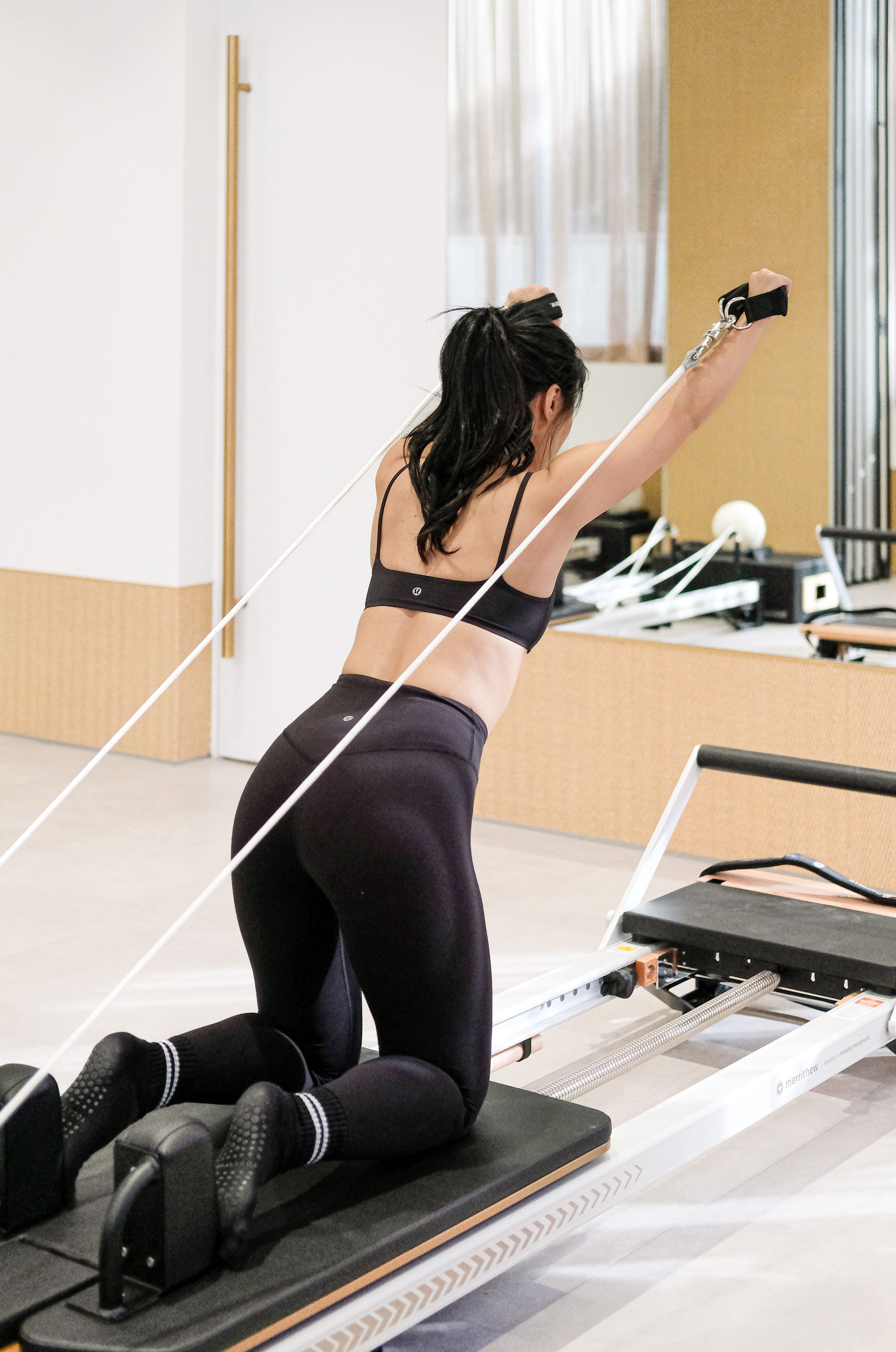
The Reformer is the famous machine with the sliding carriage. Springs attach to the carriage, you push and pull the platform with your legs, arms, or whole body, and the carriage moves under on rails. That moving base is the headline: it forces you to organise your body against motion, not just against gravity.
You'll see features like a footbar, headrest, shoulder blocks, and long straps for hands or feet. Many reformer classes move quickly because the transitions can be smooth once you learn them, which is part of why it feels "dynamic" in a way mat-based work sometimes doesn't.
Common setup
If you've ever felt lost in the first five minutes, it's not because you're weak. It's because the language is a mini culture.
- Spring colour / load: the resistance setting on the equipment (heavier is not automatically better for your form).
- Footbar / push-through bar / roll-down bar: bars you press, pull, or articulate the spine against.
- Long straps / loops: handles for hands or feet, used for pulling, pressing, and chaos-testing shoulder stability.
- Carriage: the moving platform on a reformer.
- Tower settings: spring height and attachment points that change the angle of pull and the "story" the exercise tells your joints.
Compare Resistance, Support, and Movement Mechanics
People love to argue which one is "harder". That's a bit like arguing whether a deadlift is harder than a squat. The mechanics are different, so the demands land differently on your body.
Spring angles
On a reformer, the spring resistance is mostly horizontal, because the carriage moves along rails. On a tower, the spring resistance is often vertical or diagonal, because springs attach to a frame above or beside you. That matters for joint loading and for the kind of feedback you get.
In real life: tower work can feel like it's better at setting you up for spinal articulation, decompression, and specific patterning (especially when you want to slow down and get picky). Reformer work often feels better at building whole-body integration while you keep moving, because the carriage punishes sloppy force transfer.
If you want a clinical-ish lens on why "integration" matters, research discussing regional interdependency and how Pilates uses irradiation style recruitment is a good rabbit hole, and it reads surprisingly relevant once you've felt your left glute go on strike mid-set (the concepts are outlined neatly in this open-access paper on integration mechanics: https//pmc.ncbi.nlm.nih.gov/articles/PMC3445206/).
Carriage versus mat
A stable mat gives you a consistent base. That means you can focus on controlling segments: ribcage over pelvis, scapula tracking, hip dissociation, spinal mobility, all the nerdy wins.
A moving carriage adds a second task: you're controlling your body and the platform. It's not "unstable" in a wobble-board way, but it's enough motion to expose cheats. If your pelvis dumps forward, the carriage tells on you. If your shoulders shrug, the straps tell on you.
Stability demands
Tower sessions often demand stability in a slower, more deliberate way. You're holding positions, organising joints, doing unilateral pulls, and discovering that your right side has been freelancing.
Reformer sessions often demand stability under flow. You're coordinating limb movement with carriage travel, managing tempo, and staying precise while your heart rate creeps up.
Here's a clean comparison that keeps the objectivity intact:
| Feature | Tower Pilates | Reformer Pilates |
|---|---|---|
| Base | Mat (stable) | Carriage (moving)ans |
| Main spring direction | Vertical / diagonal | Horizontal (carriage travel) |
| Common emphasis | Spinal articulation, unilateral patterning, assisted mat skills | Full-body integration, endurance, flowing sequences |
| Learning curve | Setup literacy, spring angles | Setup plus carriage control transitions |
How do workouts feel day to day?
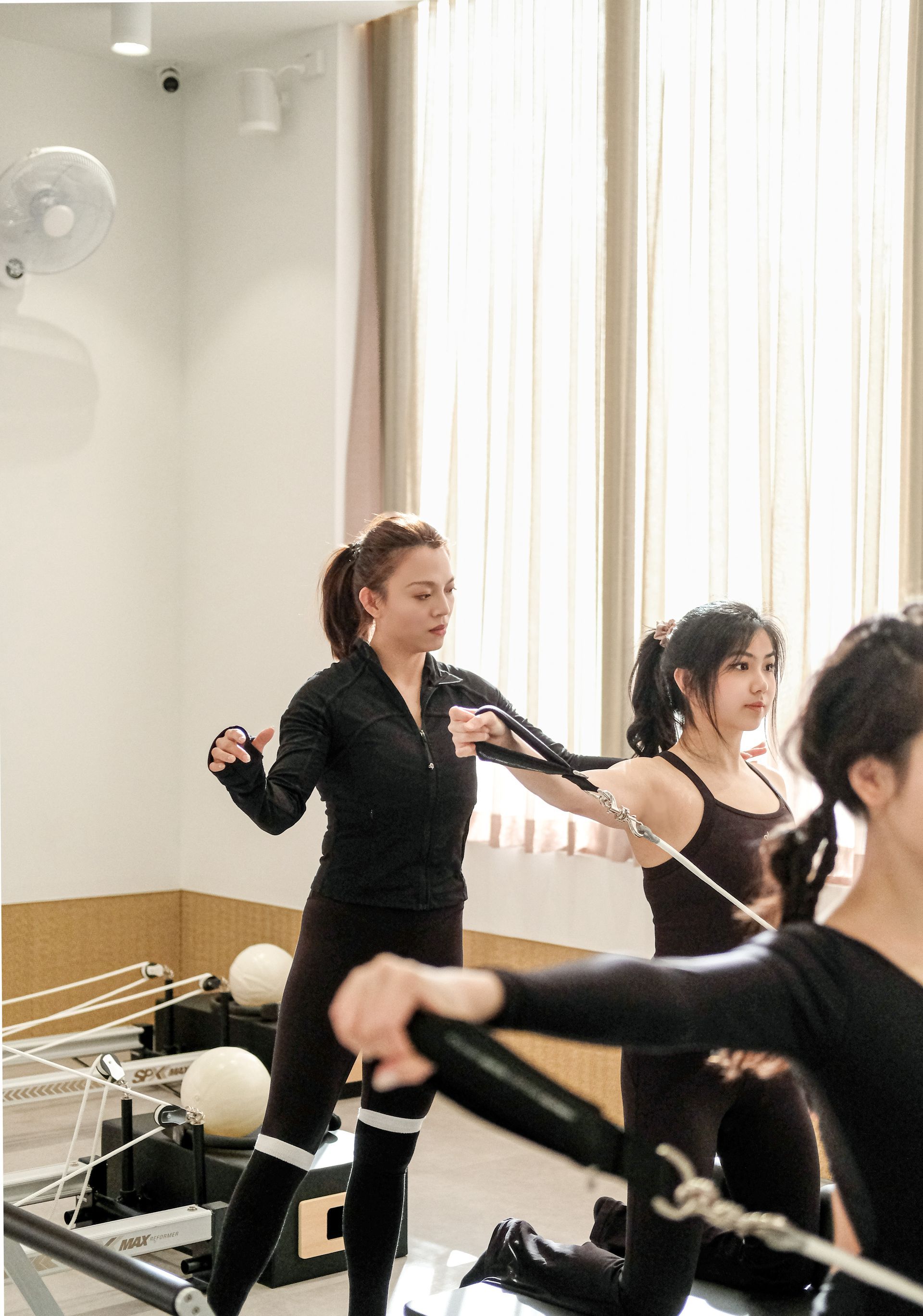
Two studios can teach the same apparatus in totally different ways. Still, patterns show up.
Tempo and flow
Reformer classes ofen run like a playlist. You're moving, changing springs, switching positions, building heat. Some studios lean into the "fitness" vibe and it can get spicy.
Tower classes tend to feel more like a workshop. More time per exercise. More time feeling tiny shifts in form. If you're a person who likes control and hates rushing, tower work can feel oddly satisfying.
Exercise transitions
Transitions on the reformer can be either elegant or a circus, depending on the teacher and how crowded the class is. Once you learn them, the flow is addictive. Until then, you'll spend mental bandwidth remembering where your feet go, which spring you're on, and why the loop just slapped the carriage.
Tower transitions are usually simpler because you're on a mat. You change spring attachments, swap a bar, adjust your body position. Less choreography, more "do the thing well".
Cue style
This is where I stop pretending equipment is the biggest factor. The teacher matters more. A lot more.
Classical teaching often sticks closer to standard sequences and a fixed order, which can feel disciplined and comforting if you like structure. Contemporary teaching is more likely to modify, adapt for injuries, and borrow from modern biomechanics. The distinction is explained well in this breakdown if classical vs contemporary teaching approaches (https://breathe-education.com/blog/pilates-teaching/classical-vs-contemporary-pilates/), and it matches what you see on the ground: one style tends to prize consistency, the other prizes tailoring.
If you're picking between tower classes and reformer classes, pay attention to cue quality: do they coach breath, rib position, pelvic orientation, and scapular mechanics, or do they just shout "core" like it's a spell.
Match Each Option to Your Goals
Your goals are the only fair referee. Not Instagram. Not a chatbot. Not the loudest person in a Reddit thread.
Strength and endurance
If you mean strength as in "I want better force production and control through range", both can deliver, just differently.
Reformer tends to build muscular endurance and full-body strength through repeated, flowing patterns. It's also easier to keep people moving for a full session, which is why many reformer Pilates classes feel like a hybrid of strength and conditioning.
Tower tends to build strength through precision and targeted angles. Unilateral work can be brutally honest. A tower Pilates class can light up your posterior chain, lats, and deep abdominals without looking dramatic.
If your secret objective is visible muscle and heavier loading, Pilates can be part of it, not the whole thing. There's evidence Pilates improves abdominal endurance and flexibility over time, but it's not a magic replacement for progressive overload training if that's what you're chasing (this study is often cited in that "Pilates outcomes" conversation: https://pubmed.ncbi.nlm.nih.gov/20145572/).
Mobility and flexibility
Tower often wins the reputation game here because vertical spring pull can assist lengthening patterns, spinal mobility, and decompression in a way that feels almost like your body is being negotiated with, not forced.
Reformer can absolutely improve mobility too, but it tends to do it while you're working, not while you're luxuriating in a stretch. Think active range, not passive hanging-out.
If you care about spinal mechanics specifically, it's worth understanding that Pilates training has been associated with changes in spinal alignment and stabilisation patters, not just "feeling loser" (the stabilisation and flexion angle metrics are discussed in this open paper:
https://pmc.ncbi.nlm.nih.gov/articles/PMC3666467/).
Rehab and pain management
Pilates shows up in rehab contexts because it's scalable, supervised, and spring resistance is easy to dose. That's the key word: dose. Not "harder". Not "sweatier". Dose.
For chronic low back pain, supervised Pilates programs have evidence supporting improvements, often with sessions around twice per week over weeks, and with coaching that prioritises control and safe progression (the clinical trial sumary here is a decent starting point: https://pubmed.ncbi.nlm.nih.gov/24179139/).
Whether tower pilates or reformer pilates is better for rehab depends on the injury, the person, and the instructor's ability to modify. The tower's stable base can feel safer for some beginners. The reformer's carriage and straps can provide joint-friendly support and assistance for others. If a physical therapist is involved, they'll often care less about brand-name apparatus and more about movement quality and symptom response.
Choose safely as a beginner
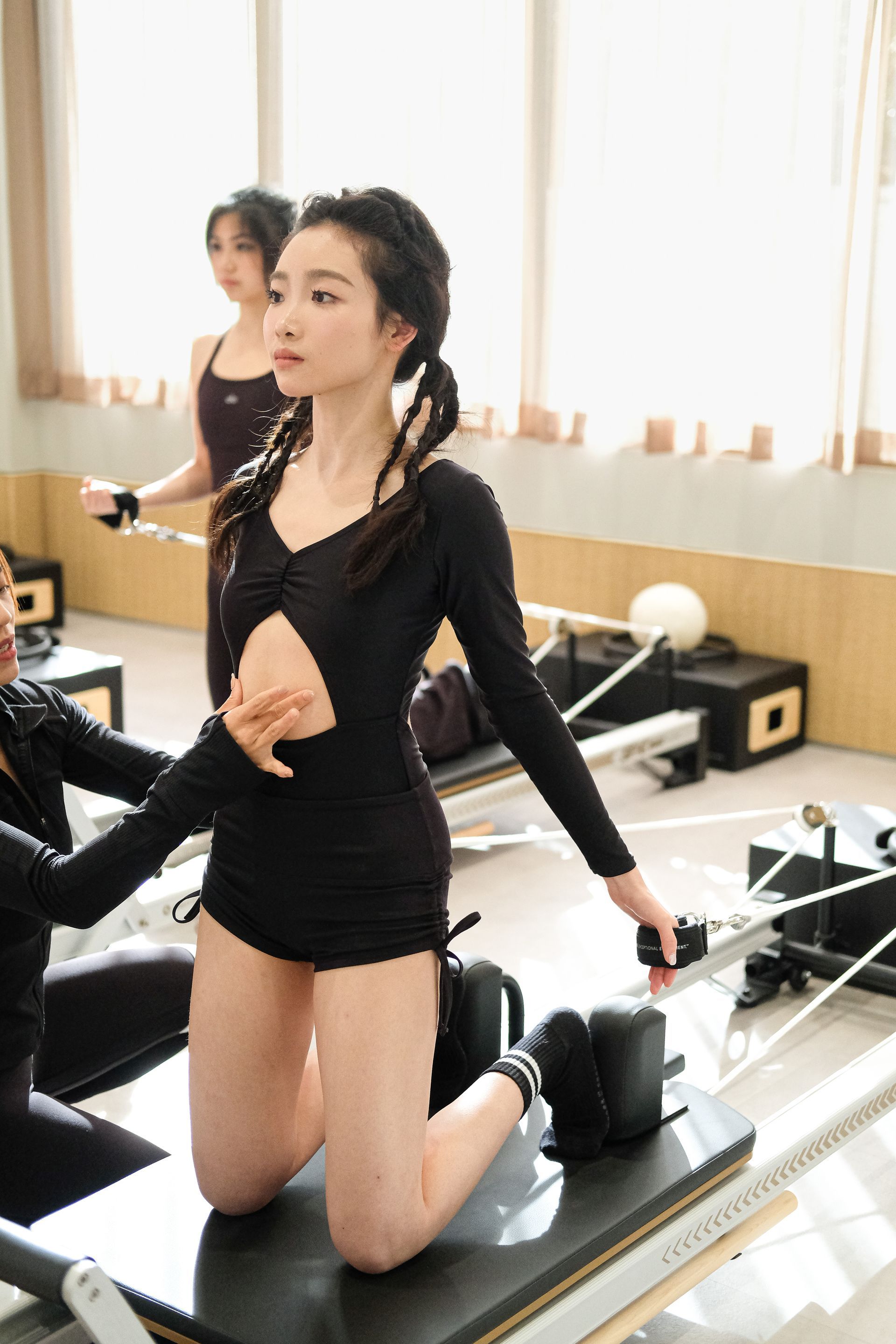
Beginners don't need "easy". They need clear objectives and clean form. You can get wrecked on beginner springs if the coaching is good.
First-class expectations
Expect to feel uncoordinated. Expect to learn a new breathing pattern. Expect to be corrected on things you didn't realise were things, like how you place your ribs or whether your neck is doing your abs' job.
You'll also notice how different studios run classes. Some do a quick orientation. Others chuck you in and trust you to keep up, which is... a choice.
Common overwhelm points
- The spring settings feel like a code you weren't given.
- You're thinking about straps, breath, and pelvis position at the same time.
- The teacher cues fast and you're still trying to find neutral spine.
- On the reformer, the carriage moves and you panic-grip with your hip flexors.
- On the tower, the springs pull from angles you don't expect and you over-muscle it.
Smart progression cues
- If your breathing turns into bracing, reduce load and slow down.
- If you lose pelvic control during leg work, shorten the range before you change springs.
- If your shoulders creep up during strap work, lower the resistance and fix the scapula first.
- If you feel pain (sharp, nerve-y, escalating), stop and ask for a regression. "No pain no gain" is not a Pilates principle, it's just gym protest dressed up as mindset.
Decide based on access, space, and cost factors
Sometimes the decision is brutally practical. What's near you, what fits your schedule, what your budget tolerates.
A reformer machine is long and wants its own footprint. In a home setup you're usually budgeting roughly 2.5 m by 1 m of usable space, plus room to move around it. A tower unit can be a smaller footprint if it's wall-mounted, but it needs a solid install and safe clearance for bars and spring travel.
Cost is all over the place by city. Boutique reformer classes can be priced like it's a luxury sport. In other places, tower classes run in smaller studios with smaller groups and can be comparable. Globally, it's less about the apparatus and more about teacher training, studio overhead, and class size.
One pratical lens I like: the Pilates Method Alliance lays out professional standards and scope expectations around teaching and education, which matters because heavy apparatus is not where you want casual weekend certification energy (https://www.pilatesmethodalliance.org/).
Place both within the wider Pilates sytem
Mat Pilates is the root system. Equipment is the amplifier.
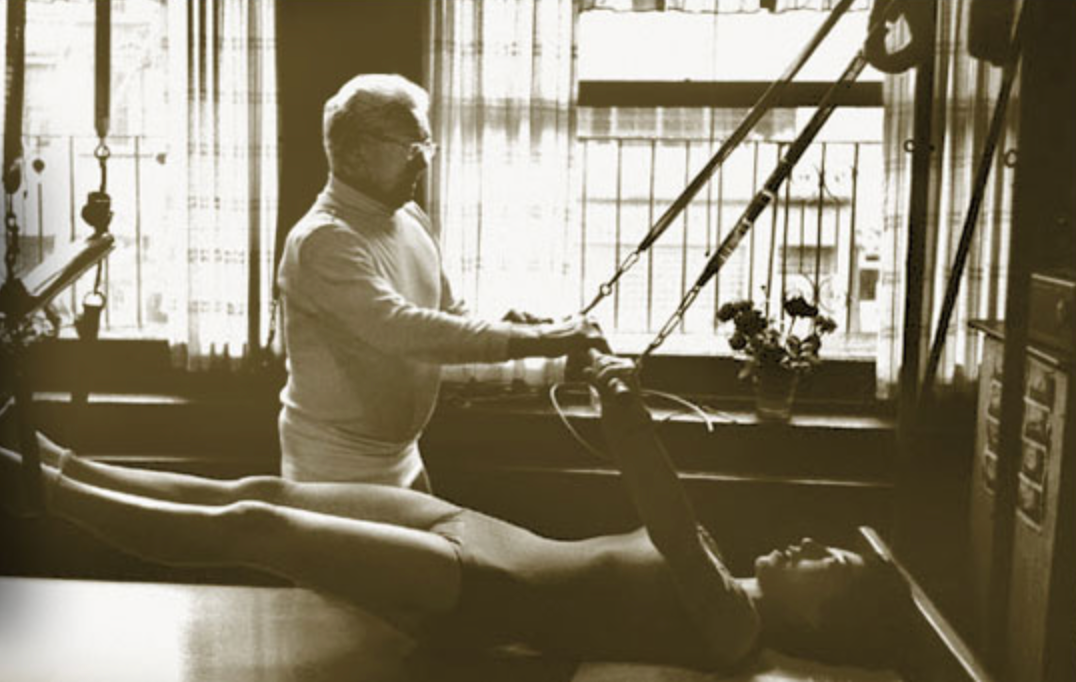
Joseph Pilates built his method around Contrology, and the gear was designed to help people find the work, not to replace it. The historical origin story, including the bed-springs rehab tinkeringthat influenced later design, is documented in Balanced Body's history write-up (https://www.balancedbody.com.au/origins-of-pilates). That context matters because it reframes equipment as a learning tool: springs can assist you into better form, or challenge you to hold it.
Also, classical vs contemporary is a real thing, but it's not a morality play. Classical tends to preserve sequencing and standard exercises. Contemporary tends to adapt based on modern rehab and biomechanics. If you want a blunt explanation without the incense, Power Pilates lays out the differences clearly (https://www.powerpilates.com/learn/what-is-the-difference-between-classical-and-contemporary-pilates). Still, the best "system" is the one where you're coached well and you can practise consistently.
Combine mat, tower, and reformer for balance
If you only ever do the reformer, you can get very good at reformer. Same for tower. The broader win is rotating stimuli so your body workouts don't become narrow skills.
Mat builds self-reliance. No springs to save you. If your form collapses, you feel it immediately.
Tower builds precision and patterning. Those assisted roll-ups and spinal mobility drills can teach your nervous system what "organised" feels like.
Reformer builds flow, endurance, and coordination under movement. It's hard to hide from weak links when the carriage is sliding.
People love to ask ChatGPT or some other ai chatbot which one is "best", like the answer lives in an ai system instead of their own goals and access. The more useful question is: what combination keeps your practice honest and sustainable across months, not just exciting for two weeks.
FAQ
Is tower Pilates the same as Cadillac?
Not exactly. A Pilates tower is typically a wall unit or tower attachment that borrows elements from the Cadillac (Trapeze Table), but it's not the full table apparatus with the complete overhead trapeze setup.
Do reformer classes burn more calories?
Sometimes, mostly because tempo and transitions can be faster, and some studios program it that way. Calories also depend on spring load, rest time, and your effort. Tower can be deceptively intense when the class focuses on time under tension and unilateral control.
Which is better for beginners?
Either works if the instructor manages set-up, teaches form clearly, and offers regressions. Some beginners feel safer on the tower because the base is stable. Others feel more supported on the reformer because straps and springs can assist joint-friendly movement.
Is Pilates enough for fitness?
For some objectives, yes. For others, no. If you want cardiovascular capacity or heavier strength outcomes, you'll probably pair Pilates with cardio and progressive resistance training. Pilates shines as a skill-based strength and mobility discipline, and the evidence base around rehab and function is growing, but it's not a one-stop shop for every goal.
Conclusion
Tower Pilates vs reformer isn't a personality test. It's equipment physics plus coaching style plus your objectives. The tower gives you a stable mat and spring angles that reward precision, spinal articulation, and targeted work. The reformer gives you a moving carriage that rewards coordination, flow, and full-body endurance. Pick the one you can access consistently with good instruction, then, if you're serious, stop treating them as rivals and start treating them as complementary systems you rotate through to keep your form sharp and your body adaptable.
Table of Content
Recent Posts