Author:
Published Date:
Share:
If you’re dealing with scoliosis, Pilates can be part of the plan, and there’s even evidence in adolescents for improved coronal balance and Cobb angle changes (Frontiers in Pediatrics scoliosis study). Just don’t treat it like a generic posture Pilates workout, it’s not.
Additionally, Pilates enhances muscle tone and flexibility, particularly in areas like the legs, glutes, and shoulders, creating a balanced, lean physique. Regular practice strengthens the smaller stabilising muscles often overlooked in traditional workouts, which contributes to better balance, coordination, and joint support. This combination of core stability and full-body strength also improves endurance and mobility, allowing for greater physical resilience and ease of movement in daily life.
Most people don’t actually want “perfect posture”. They want to stop feeling folded in half by 3 pm, stop cranking their neck forward at a laptop, stop getting that pinchy shoulder thing when they reach overhead, and stop ending the day with a tight back that makes them walk like an old fence.
So, yes, reformer Pilates can help with posture. Long term too. Not because it teaches you to “stand up straight” like a school photo, but because it trains the deep core, scapula control, spinal alignment, and body awareness under load, then makes that new movement pattern annoyingly hard to unlearn. The catch is consistency. A couple of sessions won’t overwrite ten years of desk habits, stress breathing, and phone-neck.
I’m also going to be blunt: if your posture issue is mostly structural (scoliosis, vertebra changes, osteoporosis-related kyphosis, post-surgical stuff), Pilates can still be useful, but it needs a clinical Pilates instructor or physio-led plan, not a “sweaty burn” class where everyone does the same exercise to the same beat.
Can this method improve posture long term?
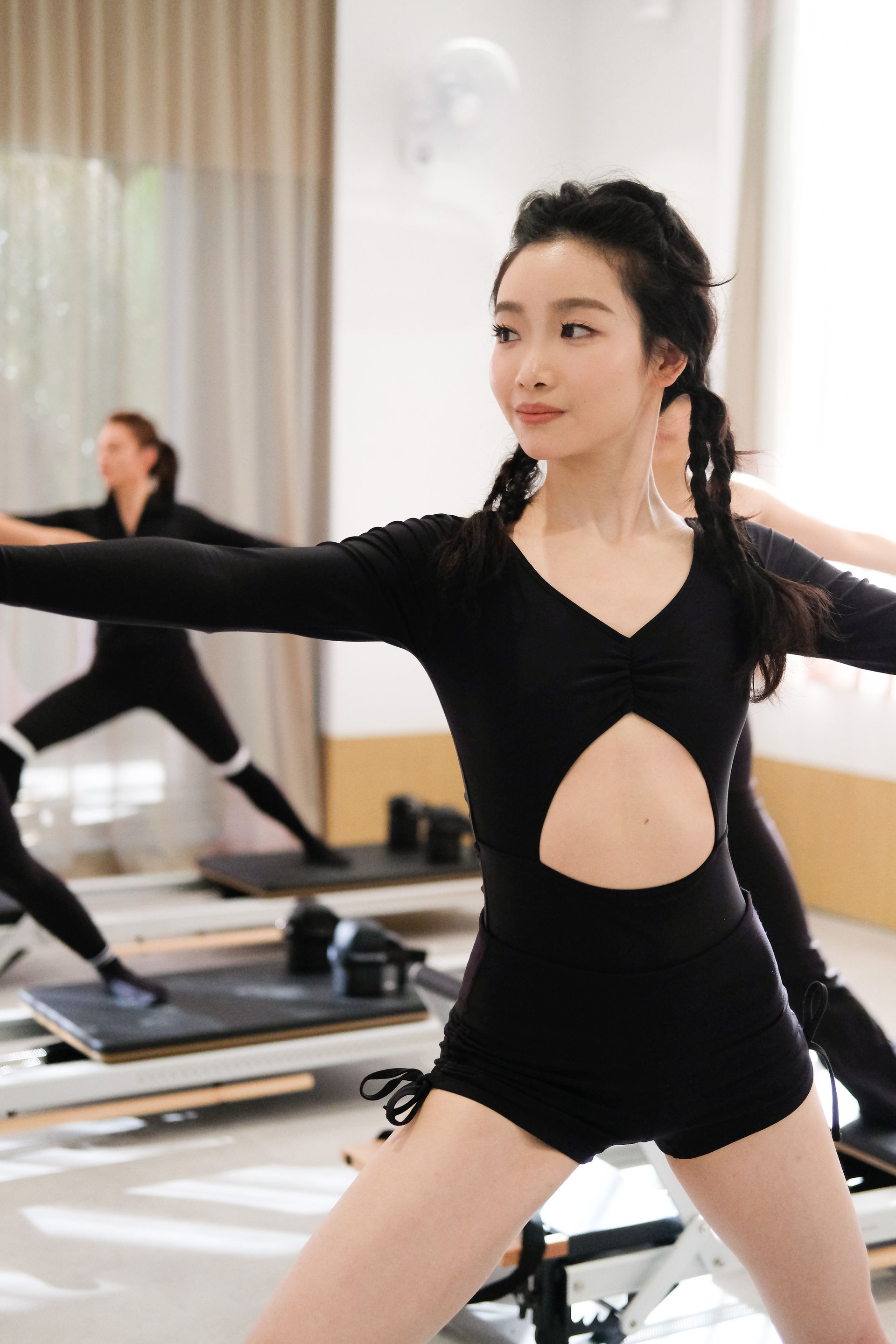
If you practice regularly and you’re doing the right work, Pilates can change your default alignment over time. The research trend backs that up, even if the adult data is messier than the Instagram reels suggest. A 2024 systematic review in a PMC paper on Pilates and body posture found improvements in postural misalignment across multiple trials, with stronger effects showing up in younger groups and more variable outcomes in adults (which tracks with real life, adults are stiffer, busier, and better at compensating).
In rehab land, that matters. The Australian Government’s Natural Therapies Review (Pilates evidence evaluation) basically lands on “safe, adaptable, promising” for musculoskeletal conditions and posture, which is the kind of dry endorsement I trust more than hype.
What changes first
The first thing that shifts is usually not how you look, it’s how you feel in your body. The “collapsed chest” feeling eases, your ribs stack better over your pelvis, your neck stops doing everyone else’s job, and your back body can actually share the workload.
- Early changes people notice tend to be:
- breathing feels less stuck in the top of the chest, with more rib cage expansion on inhale
- better awareness of where “neutral spine” is, instead of guessing
- less shoulder tension because the scapula finally learns to glide and set
- standing and sitting takes less effort, like the belt of support around the waist switches on
Those are the little tells that the postural muscles are waking up and coordinating, not just getting stronger in isolation.
Who benefits most
Desk workers. People with forward head posture. Anyone who lives in a world of laptops, driving, and stress breath-holding. Also, people who are “flexible but unstable”, the ones who can stretch forever but can’t hold proper alignment when they lift, carry, or walk fast.
It also shines when posture problems are really movement problems. If your pelvis dumps forward because your hip flexors are tight and your glutes don’t fire well, Pilates gives you a way to reorganise that pattern with control, not just stretching and hoping.
And if you want a very literal example, there’s a 10-week adult study showing Pilates improved cranio-vertebral angles in forward head posture, which is fancy talk for “your head stopped living in front of your neck” (Journal of Physical Therapy Science forward head posture study).
What results to expect
Expect gradual, boring progress that suddenly becomes obvious when you catch your reflection and think, “Huh. Taller.” That’s the real vibe. When I’ve committed to posture-focused routines, the surprise wasn’t looking straighter, it was fatigue dropping off. I stopped bracing my neck all day. My shoulders sat better without me micromanaging them.
Also, a reality check I agree with completely: posture is a daily ecosystem. Pilates fights your habits, but only if you show up enough for your nervous system to choose the new option automatically, which is why those “tried it once, didn’t work” takes don’t impress me. If you want a readable version of that idea, this piece on Pilates for posture captures the “it sticks when it becomes a habit” angle pretty well.
Why posture matters for health and daily function
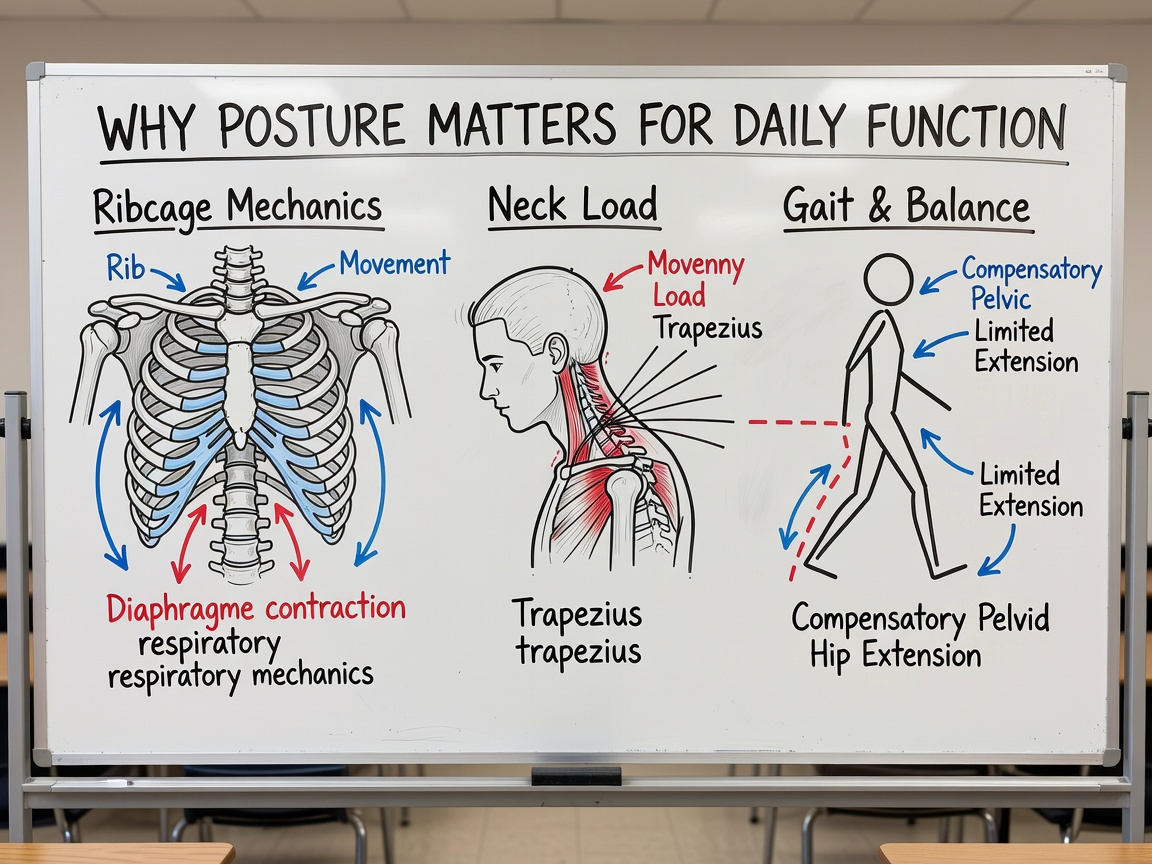
Posture isn’t etiquette. It’s load management. Your joints, muscles, and nervous system are negotiating gravity all day, and your alignment decides who pays.
Breathing and ribcage mechanics
When the rib cage flares up and the pelvis tips, breathing gets weird. You end up with a shallow chest breath that never really drops into the sides and back, and then you wonder why your shoulders live near your ears. Pilates breathing techniques, the lateral expansion idea especially, can nudge the ribs back into a better relationship with the spine so the diaphragm can do its job. It’s not mystical. It’s mechanics.
You can feel it on a reformer quickly: if you can’t keep ribs heavy while you move your arms or legs, you’ll default to extension. That extension bias looks like “good posture” for about three seconds, then it turns into compression in the back and tension in the neck.
Neck, shoulder, and back load
Forward head posture is basically your neck trying to hold up a bowling ball that’s been pushed forward. The load increases. The upper traps get cranky. The deep neck flexors go on holiday. Then your shoulder mechanics get sloppy, your scapula sits weird, and suddenly even a normal day of reaching and lifting feels like a threat.
This is where Pilates earns its keep, because scapula control is baked in. A good teacher will cue the shoulder blade to slide and wrap, not pin down, while you maintain length through the neck. Subtle, but massive for long-term ease.
Balance, gait, and fatigue
Posture shows up in your gait. If your spine is stiff in the thoracic area, you rotate less when you walk. If your pelvis isn’t organised, your hip extension gets blocked and your stride shortens. Balance gets worse, especially when you turn your head or walk on uneven ground. People often blame “weak ankles” when the real issue is the whole chain being out of whack.
Pilates tends to improve balance partly through strength, partly through coordination, and partly through proprioception. Your body stops guessing where it is in space.
Fix your posture patterns, not just position
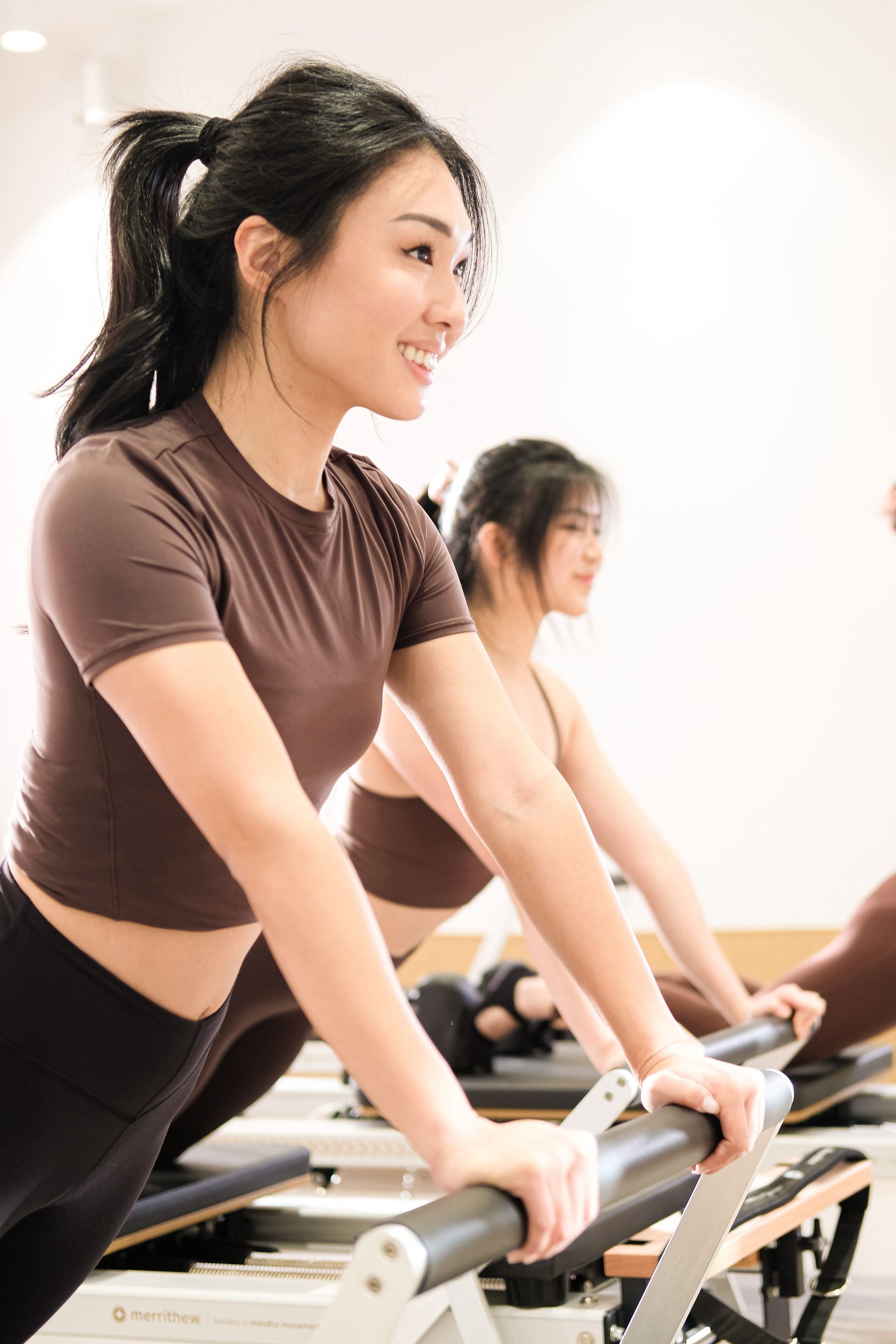
Trying to “hold” good posture is like trying to hold your breath to look calm. You might pull it off for a meeting. It won’t survive a normal day.
Core stabilisers and spinal control
When Pilates people say “core”, they’re usually talking about the deep system: transverse abdominis, multifidus, pelvic floor, diaphragm, and the way they pressurise the trunk like a can. That’s your internal belt. When it works, your spine has options. You can flex, extend, rotate, and come back to centre without collapsing.
A 2023 paper on transverse abdominis activation in Pilates training digs into that stabiliser angle if you like nerdy confirmation (Journal of Back and Musculoskeletal Rehabilitation research).
Scapula control and shoulder mechanics
Rounded shoulders are rarely just “tight pecs”. They’re often a scapula that sits forward and downward, with serratus anterior and lower traps underperforming, plus a thoracic spine that won’t extend. Pilates exercises that cue the shoulder blade to upwardly rotate and posteriorly tilt, while the ribs stay stacked, teach the shoulder to behave under real arm load.
If you want the physio version of that story,
Kinematics Physio’s take on improving posture with Pilates explains the spring-based resistance and alignment feedback in a way that actually matches what happens in studio.
Proprioception and habit carryover
This is the sneaky benefit. Reformer work gives you feedback you can’t ignore. Springs tell you if you’re cheating. The carriage tells you if you’re shifting. Straps expose asymmetry fast.
That’s why Pilates for posture works best when you’re also paying attention outside class. You notice your desk setup, your phone angle, how you breathe when you’re stressed, how you stand in a queue. It’s annoying. It’s also the whole point.
Spot the posture issues it often addresses
| A | B | C | D |
|---|---|---|---|
| Pattern you see a lot | What it looks like in real life | Likely drivers (common, not exhaustive) | What Pilates usually targets |
| Forward head and upper-cross pattern | Chin pokes, neck feels compressed, chest tight, shoulders creep up | Deep neck flexors weak, upper traps overworking, thoracic stiffness, lots of desk time | Neck length, scapula control, thoracic mobility, rib cage position with breath |
| Rounded shoulders and stiff thoracic spine | Upper back kyphosis vibe, arms feel limited overhead | Pec minor tight, serratus and lower traps underactive, thoracic extension limited | Rowing patterns, spinal articulation, extension control without flaring ribs |
| Anterior pelvic tilt and lumbar extension bias | “Swayback” look, lower back feels tight, glutes don’t show up | Hip flexors tight, abdominals disengaged, glutes under-recruited, poor pelvic awareness | Pelvic neutral, posterior chain strength, hamstring-glute integration, neutral spine under leg load |
If you’re dealing with scoliosis, Pilates can be part of the plan, and there’s even evidence in adolescents for improved coronal balance and Cobb angle changes (Frontiers in Pediatrics scoliosis study). Just don’t treat it like a generic posture Pilates workout, it’s not.
Use safe reformer exercises for posture correction
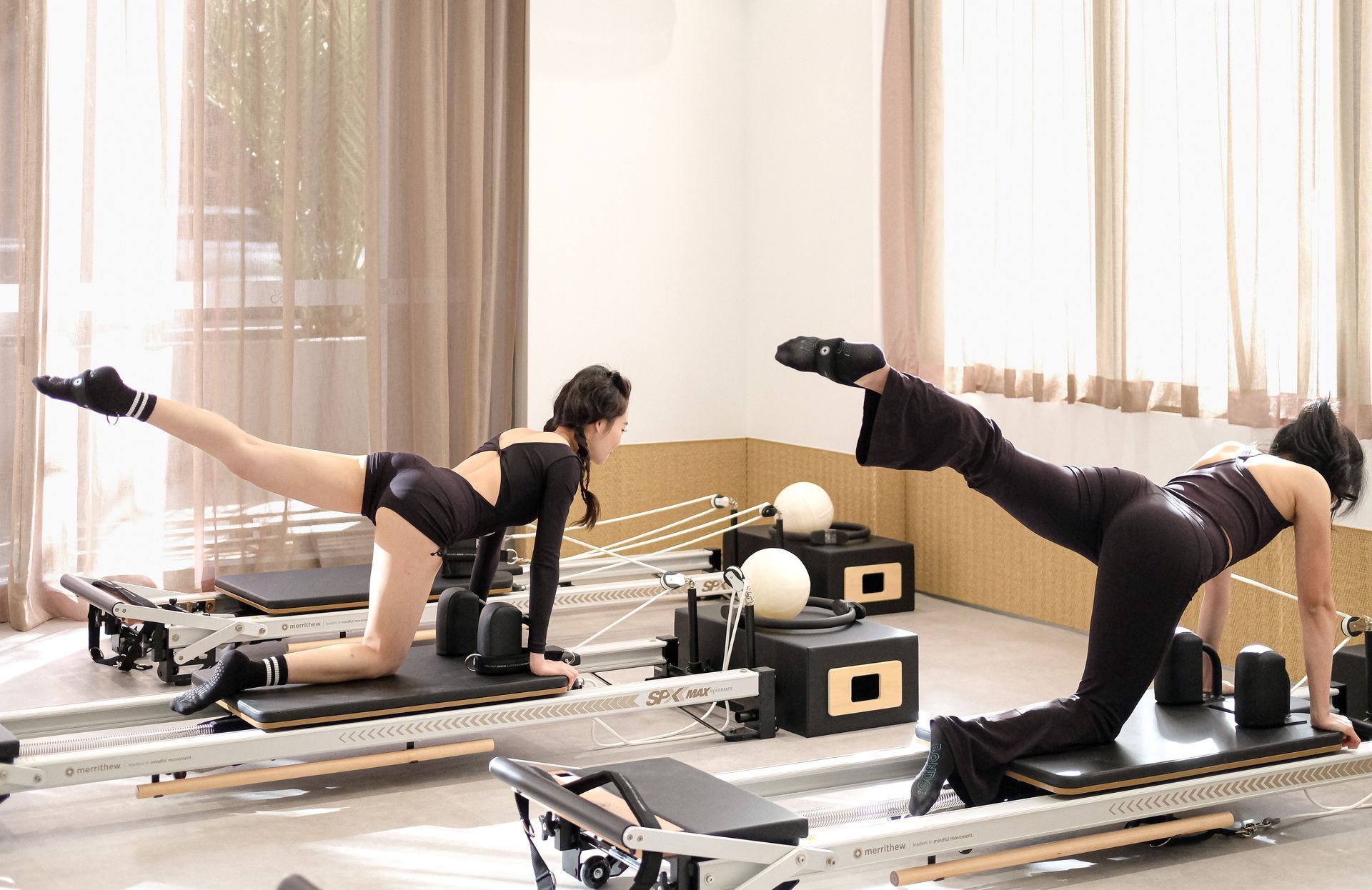
I like reformer for posture because the machine is honest. It rewards proper alignment and exposes the parts of your body that love to freeload.
Footwork and pelvic neutral
Footwork looks basic, and it is, which is why it’s so useful. You’ve got feet hip-width on the bar, knees tracking over toes, and the whole goal is to press out without dumping into the lower back or gripping the hip flexors.
Cues I use a lot: keep the sacrum heavy, feel the abdominals draw in like a gentle belt, and let the breath stay wide. Exhale on the press, inhale to return, not because that’s a rule, but because it stops you bracing your neck.
Progression is boring and effective. Start with small range. Build control. Then add range, tempo changes, single-leg work, maybe heels and toes variations when your pelvis can stay organised.
Rowing and scapula set
Rowing is posture gold when it’s taught properly, and posture chaos when it’s taught like an arm workout. You’re trying to move the arm without the ribs popping and without the shoulder blade being jammed down.
Think: collarbones wide, shoulder blades sliding on the back, neck long, ribs stacked. If your chest flares to “help”, you’re practising the exact pattern you’re trying to stop.
If you’re using straps, keep tension even, avoid death-gripping, and let the scapula upwardly rotate as the arms lift. Your shoulders should feel supported, not pinned.
Long box extension and hinge control
Back extension work is where people either get their thoracic spine back, or they crank into their lumbar spine and call it a day. On the long box, I want length first. Then lift.
A hinge is different to a collapse. You can cue it as “reach the crown of the head forward, lift the sternum slightly, keep the ribs heavy”, and if that sounds fussy, good. That fussiness is spinal control.
Start with a small lift. Add time under tension. Add arm movement later. If your neck grabs, reduce range and fix the breath.
Progress safely and avoid common technique errors
Your posture will not improve if every session is you practising compensation patterns with springs.
Spring choice and range limits
Heavier springs can help you feel the back body, but they also encourage bracing and rib flare if you’re not ready. Lighter springs expose control, but they can feel unstable. Both have a place. The rule is whether you can keep proper alignment, not what colour spring your studio uses.
Range is the other trap. People chase flexibility when what they need is stability. If your pelvis moves, ribs pop, or your neck tightens, you’ve gone past your current capacity. That’s not “challenge”. That’s noise.
Key cues for neck and ribs
A lot of “poor posture” is really “ribs living in the wrong postcode”. Fix the rib cage and the neck often improves by itself.
Common errors that wreck the point of the session:
- jutting the chin forward when effort increases
- flaring the ribs to fake a tall spine
- gripping glutes so hard the pelvis stops moving well
- locking knees and losing foot tripod contact
- yanking from the arms instead of moving from the back and scapula
If you can clean those up, you’re suddenly doing posture Pilates instead of cardio Pilates cosplay.
Pain rules and red flags
Discomfort from effort is normal. Sharp pain, nerve symptoms, or increasing pain after sessions is not.
If you get tingling, numbness, radiating arm or leg pain, dizziness with extension, or you’re dealing with osteoporosis, acute disc issues, or recent surgery, get assessed. A physio-led plan matters. If you want a pragmatic clinic perspective on this whole “Pilates helps but don’t be reckless” topic, Pogo Physio’s breakdown on Pilates and posture is pretty aligned with how I think about safety and expectations.
FAQ
How often should I do Pilates for posture?
Two to three sessions a week is where most people start feeling carryover, especially if you’re desk-bound. One session can help body awareness, but regular practice is what changes postural habits.
Can Pilates fix my posture if I have scoliosis or kyphosis?
It can help with strength, mobility, and control around your existing structure, and some studies show improvements in specific groups, but it’s not a guarantee and it’s not a replacement for medical care. Get individual programming if you have a diagnosed spinal condition.
Is reformer better than mat for posture?
Reformer gives you spring resistance and feedback that makes alignment mistakes obvious. Mat work can be brilliant too, it just demands more self-awareness because there’s less external support and less “truth serum” from the machine.
What if I feel it mostly in my neck or hip flexors?
That’s usually a clue your deep core and back body aren’t sharing the load yet. Reduce range, slow down, adjust spring, and chase rib cage position with breath. If it persists, get a clinical Pilates instructor to tweak your setup.
Conclusion
If you’re hoping reformer Pilates will permanently correct your posture while you keep living like a pretzel at your desk, you’ll be unimpressed. If you treat it like training, building core endurance, scapula stability, spinal control, and better breathing mechanics, it’s one of the more reliable ways to change how your body organises itself under real life load. The payoff is not a rigid “stand up straight” pose. It’s ease. It’s less tension. It’s walking around with an aligned posture that doesn’t feel like work.
Table of Content
Recent Posts